

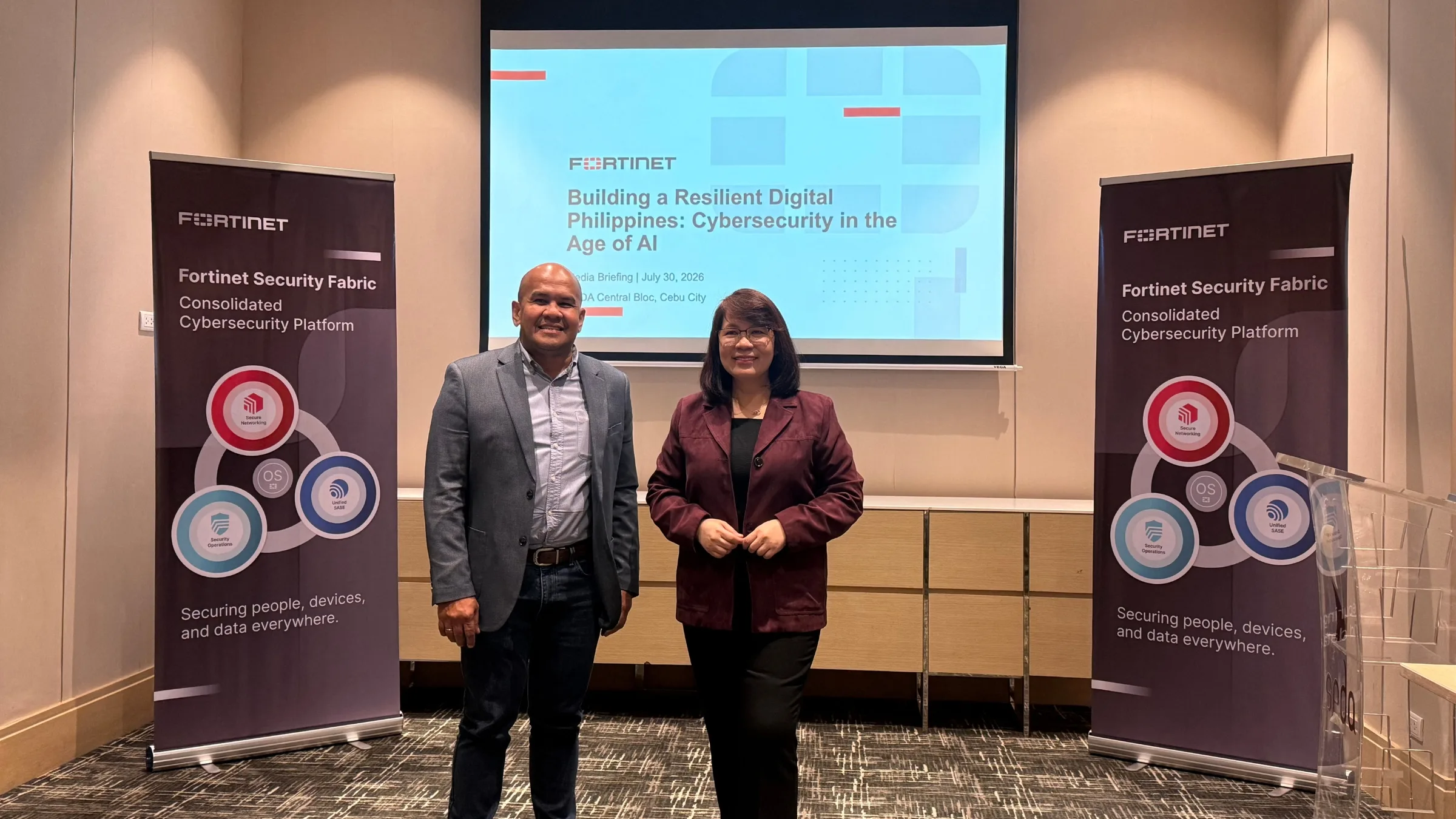
AI is transforming cybersecurity faster than the Philippines can train people to keep up with it. That’s the central warning from Fortinet’s 2026 Global Cybersecurity Skills Gap Report, released on July 30, 2026. Specifically, the report reveals a widening gap between AI adoption and the cybersecurity talent needed to defend against increasingly sophisticated threats. Based on a survey of 60 IT and cybersecurity decision-makers in the Philippines, the findings paint a sobering picture of local enterprise security readiness.
“AI is fundamentally changing how organizations defend against cyber threats, but it is also changing the skills security teams need to succeed. As organizations across the Philippines accelerate AI adoption, developing cybersecurity talent with expertise in AI, automation, and governance has become just as important as investing in new technologies.”
— Bambi Escalante, Country Manager, Fortinet Philippines
The Stakes Are High: 93% of PH Organizations Suffered a Breach
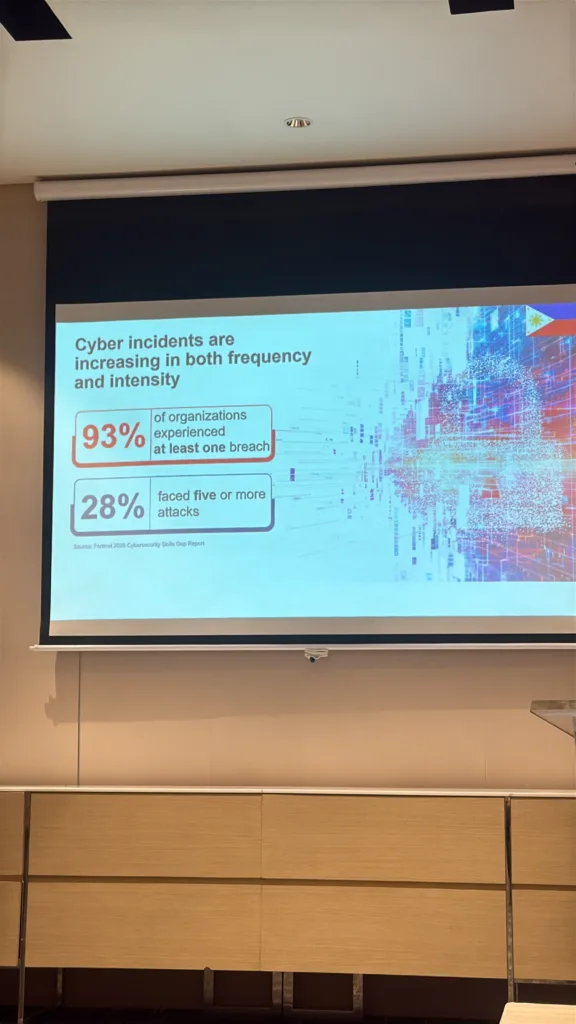
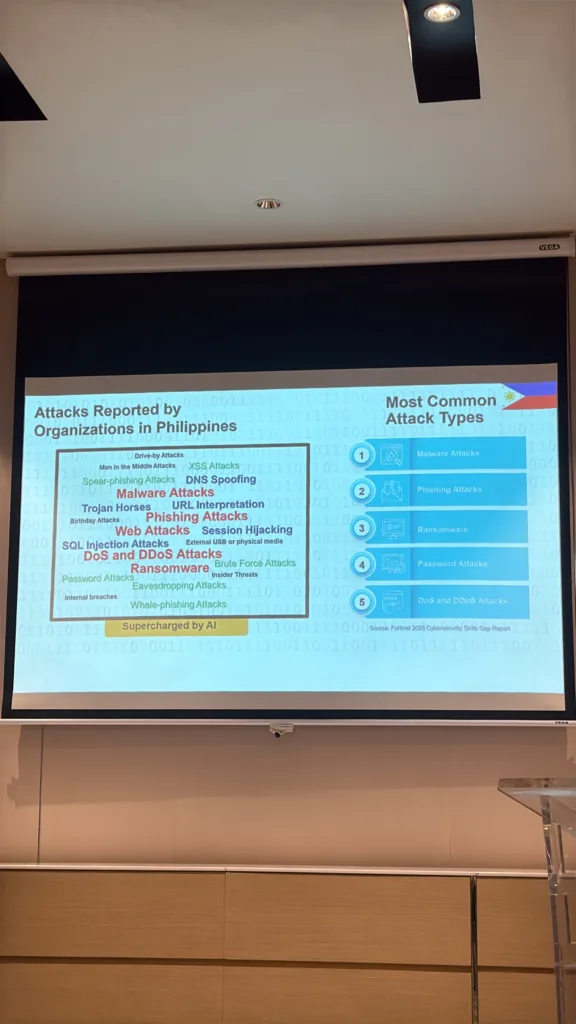
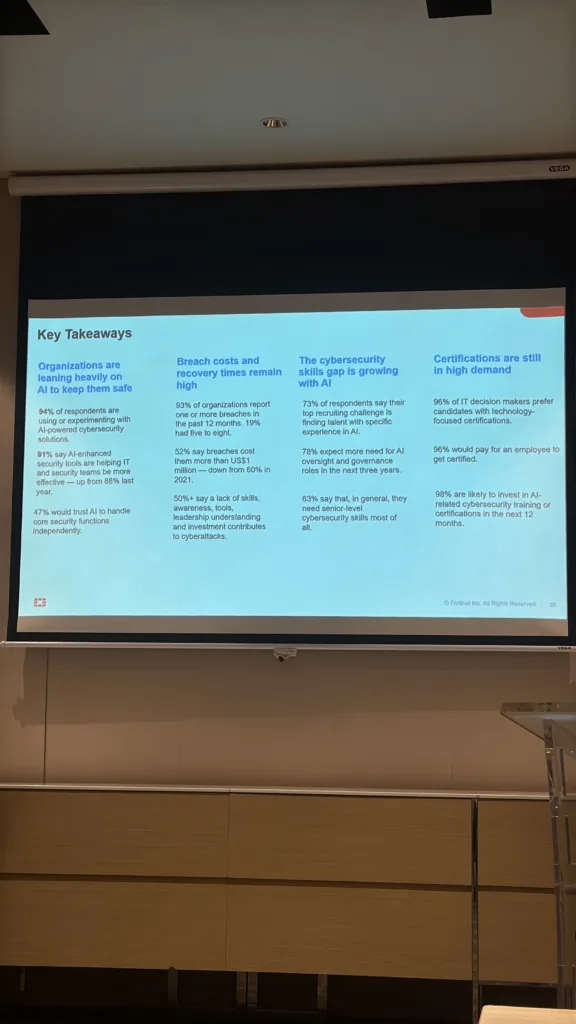
First and foremost, the numbers behind this year’s report are genuinely alarming. Specifically, 93% of organizations in the Philippines report one or more breaches in the past 12 months. Furthermore, 52% say those breaches cost them more than $1 million, while 70% said recovery took longer than a full month.
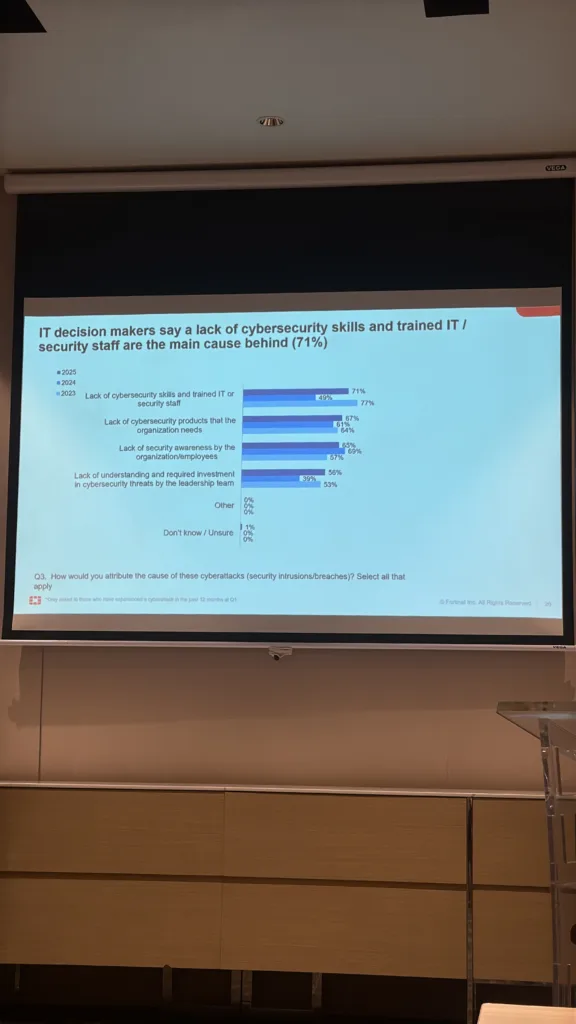
For the third consecutive year, IT leaders continue citing a lack of cybersecurity skills as a top cause of security breaches, with 71% pointing to this gap directly. Notably, 63% of Philippine respondents say they need senior-level cybersecurity skills most of all, yet 55% struggle to get approval for additional cybersecurity talent. Additionally, 58% reported that executives and even Board members faced penalties following cyberattacks — a clear sign of growing leadership-level accountability.
AI Adoption Creates Risks That Boards Don’t Fully Understand
Meanwhile, employee use of AI introduces new cybersecurity challenges that many Boards still fail to grasp. Specifically, only 65% of Philippine leaders believe their Board members are “fully aware” of the potential risks tied to AI use within their organizations. As a result, a new governance gap may be emerging: 78% of respondents expect an increased need for AI oversight and governance roles on cybersecurity teams over the next three years.
Despite Investment Gaps, Certification Spending Continues Rising
Encouragingly, willingness to invest in certifications has grown significantly. Specifically, 96% of respondents say they’d prefer an employee get certified, up sharply from 82% in last year’s report. Furthermore, organizations continue actively working to diversify their talent pipelines. Notably, 97% use internships, apprenticeships, partnerships, and dedicated programs to source talent from underrepresented groups, while 88% report having formal hiring targets from underutilized talent pools.
AI-Powered Security Tools Are Now Mainstream — But So Are the Risks
On the tools side, AI-powered cybersecurity adoption has become genuinely widespread. Specifically, 94% of Philippine respondents are using or experimenting with AI-powered security solutions. Additionally, 91% say AI-enhanced tools help their IT and security teams work more effectively and efficiently. However, skepticism remains largely unchanged from last year at 36%.
This matters because cyber defenders and cybercriminals now wield the exact same technology. Consequently, 49% of respondents cite defending against AI-powered cyberattacks as a top concern.
Organizations Race to Reskill Their Teams for the AI Era
Furthermore, 73% of respondents say their top recruiting challenge is finding cybersecurity talent with specific AI experience. In response, 98% say they’re likely to invest in AI-related cybersecurity training or certifications over the next 12 months.
Specifically, organizations say they need staff with new skillsets across three key areas: AI model development (68%), security automation (61%), and AI tool oversight (56%). Moreover, 73% of organizations are developing internal training or reskilling programs, while 65% are procuring training directly from industry vendors.
Closing the Gap Requires People, Not Just Technology
Ultimately, Fortinet’s report emphasizes that business resilience requires genuine Board and executive-level investment in a layered approach — one that blends people, processes, and technology together. Specifically, organizations should continue tapping underutilized talent pools while investing in training and upskilling to retain the expertise they need. This requires a coordinated approach built on three pillars: raising awareness and education, expanding access to targeted training and certification, and deploying advanced security technologies.
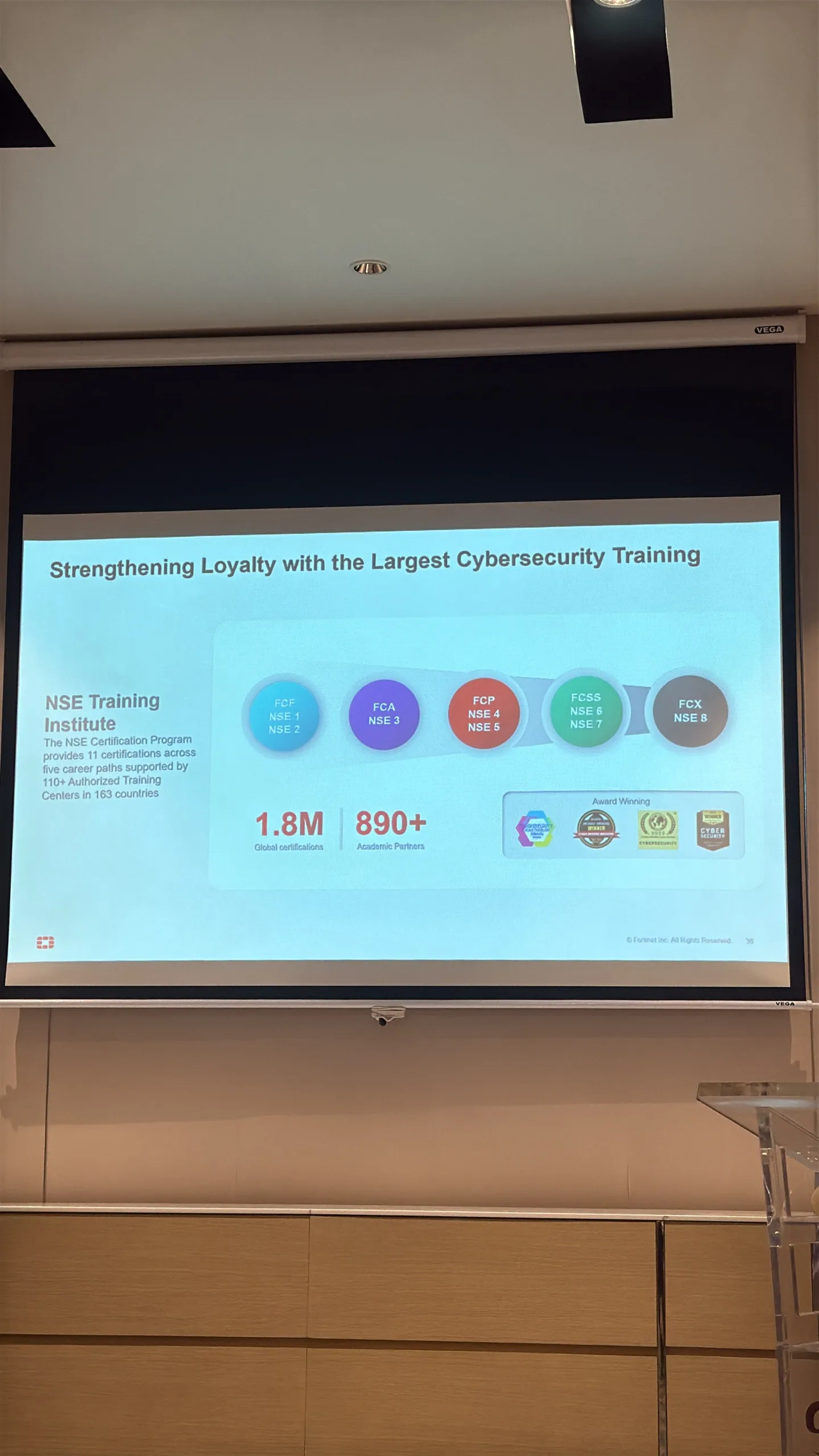
To help address this challenge, the award-winning Fortinet Training Institute provides one of the industry’s largest training programs, making cybersecurity education and career opportunities accessible to everyone. As part of this commitment, Fortinet remains on track to train 1 million people in cybersecurity worldwide this year — a pledge the company began back in 2022.
Learn More
- Read the full 2026 Global Cybersecurity Skills Gap Report
- Explore free cybersecurity training through the Fortinet Training Institute
- Learn about the Fortinet Security Fabric
- Visit fortinet.com/trust for more on Fortinet’s innovation and enterprise-grade products
For more updates, follow Fortinet on X, LinkedIn, Facebook, and Instagram.